Data Center Roofing in Richmond, VA
Data center roofing for colocation facilities, server rooms, and mission-critical buildings throughout Richmond, VA.
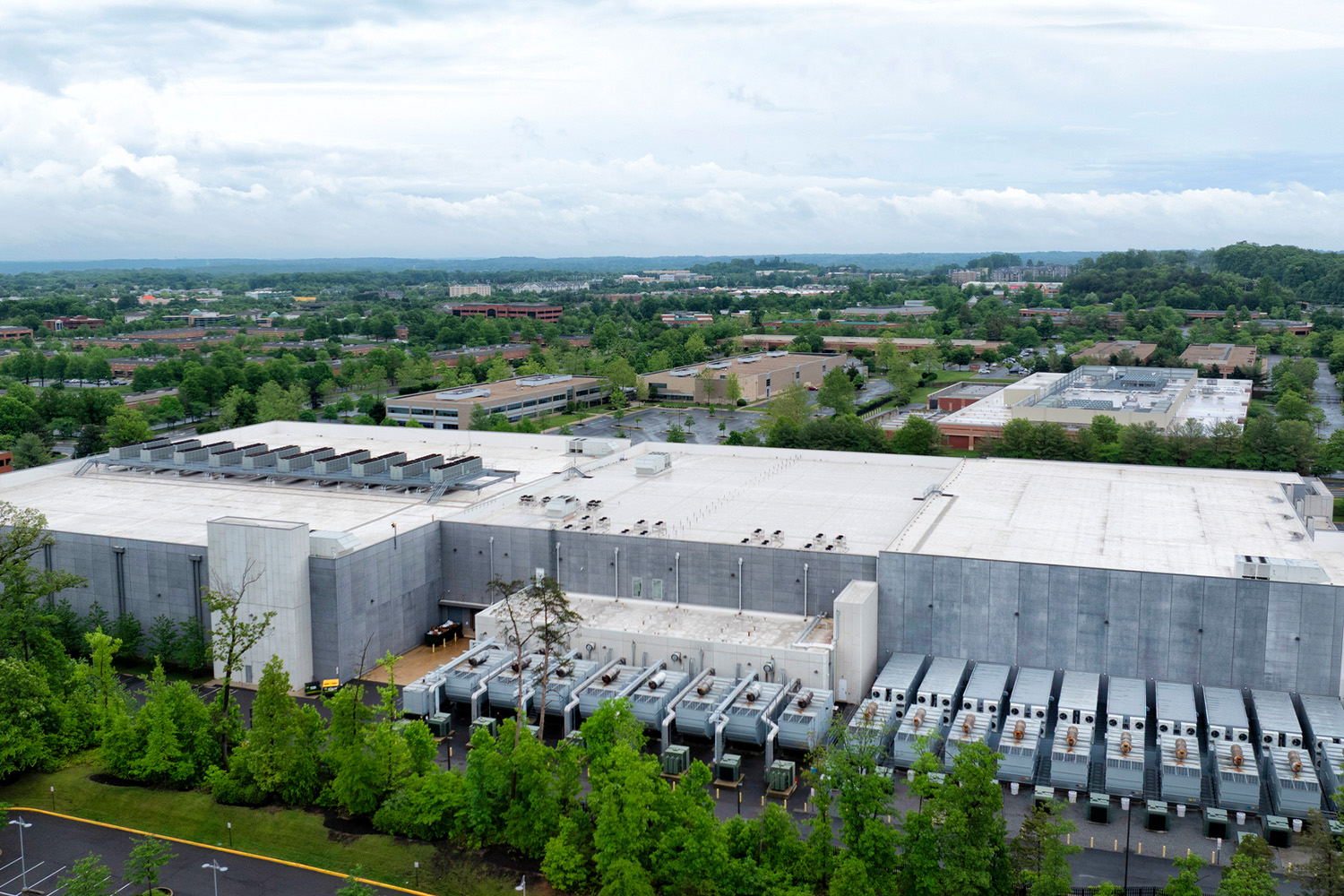
Richmond is one of the most important data center cities in the mid-Atlantic, driven by Capital One's headquarters and primary data center campus, the computing infrastructure that powers one of the largest credit card issuers and digital banking platforms in the world. Capital One's Richmond operations represent a concentration of financial technology computing that has few peers in the region, processing hundreds of millions of transactions daily and supporting a consumer-facing digital platform that requires near-continuous availability. The roofing systems protecting Capital One's data facilities carry an implicit uptime expectation that frames every roofing decision in terms of its contribution to, or risk to, the underlying computing operation.
The Federal Reserve Bank of Richmond adds a distinctive dimension to the city's data center landscape. As one of twelve regional Federal Reserve Banks and the host of the Richmond Fed's substantial computing infrastructure for monetary policy operations and financial services oversight, this facility represents the kind of mission-critical government computing that demands the highest available standards for physical infrastructure protection. Federal facilities procurement brings its own requirements, agency-specific design standards, security-cleared contractor personnel, and documentation requirements that differ from commercial practice. Contractors who navigate these requirements effectively serve this segment with a different organizational capability than standard commercial data center work requires.
Richmond's climate sits at the intersection of the Mid-Atlantic and the Upper South, producing a weather profile that demands performance across a wide range. Summers are hot and humid, genuine Mid-Atlantic heat with dewpoints that can approach 70°F, while winters deliver enough cold for significant freeze-thaw cycling and occasional ice storms. The Richmond area sits in a corridor where nor'easter storms can deliver substantial precipitation and elevated winds, and where late-season tropical systems occasionally deliver remnant hurricane-force conditions. A data center roof here must be engineered for heat-driven vapor management in summer and freeze-thaw resilience in winter, with the storm resistance appropriate for occasional severe weather events.
Vapor management in Richmond's climate reflects the transitional nature of the city's weather zone. The dominant vapor drive is inward during summer, high exterior humidity driving moisture toward the air-conditioned data center, but outward during winter when cold exterior conditions draw vapor from the warm, server-heat-supplemented interior. The correct vapor retarder specification requires analyzing both conditions and positioning the retarder on the side of the insulation that produces the most conservative design across the seasonal cycle. For data centers with high server density, where interior conditions differ significantly from a standard commercial building even in winter, the analysis should use measured interior conditions rather than handbook assumptions.
Capital One's facilities management approach has influenced roofing standards in the Richmond market in the same way that demanding institutional clients elevate standards wherever they operate. Contractors who have worked successfully on Capital One projects have demonstrated the documentation, quality control, and communication processes that a sophisticated financial technology operator requires. These capabilities are not unique to Capital One projects, they transfer directly to work on the Federal Reserve, other financial sector clients, and any organization that applies institutional-quality standards to its facilities maintenance. The Richmond market rewards contractors who have invested in these capabilities.
Roof penetration management is a significant challenge for large financial technology data centers in Richmond. Capital One's facilities carry extensive rooftop infrastructure, large cooling tower arrays, precision air conditioning units, generator exhaust systems, conduit bundles serving distributed power distribution, and fiber access points. The cumulative penetration count on a large financial data center facility can exceed a hundred individual penetrations, each a potential failure point if not properly detailed and maintained. Systematic penetration documentation, with photographs and condition ratings for each penetration updated at every inspection, provides the tracking mechanism needed to manage this complexity over time.
The Richmond construction market has a strong commercial roofing sector, with several contractors who have developed specific experience on mission-critical facilities. This is beneficial for data center operators who need to maintain competitive bidding while also ensuring they are working with qualified contractors. However, the availability of multiple competent contractors also creates risk for operators who select primarily on price, the gap between a minimum-specification compliant bid and a genuinely high-quality specification can be difficult to see in a price comparison but obvious in long-term performance outcomes. Clear, detailed specifications that define the performance expectations rather than leaving room for substitutions are the best protection against competitive-bid pressure driving down quality.
Life cycle planning for Capital One and Federal Reserve data center roofing in Richmond should account for the long operational horizons of financial infrastructure. These facilities are not built with exit strategies, they will operate for decades, and their roofing systems must either provide comparable longevity or be replaced in a way that does not disrupt the underlying computing operations. Planning for eventual re-roofing at the time of initial specification, specifying a membrane system that can be overlaid or replaced in phases, retaining accessibility documentation for all penetrations, and maintaining a history of repairs and modifications, reduces the cost and disruption of future roofing work significantly.
Security requirements at Richmond's financial computing facilities create contractor access protocols that differ from standard commercial roofing projects. Capital One and Federal Reserve facilities require background checks on roofing personnel, controlled access to facility areas, and restrictions on materials and tools that can be brought into secure zones. Contractors who have not previously worked on financial sector facilities will find these requirements add administrative burden and can affect project scheduling when personnel clearance processes take longer than expected. The contractors who serve this segment most effectively have developed the human resources systems and administrative processes to manage these requirements as routine rather than exceptional.
The long-term outlook for Richmond's data center market is positive. Capital One's continued growth as a digital banking organization drives ongoing expansion of computing capacity, and the Federal Reserve's modernization programs require sustained investment in physical infrastructure. The city's central East Coast position, competitive power costs, and relatively mild weather compared to other mid-Atlantic markets make it an attractive location for additional data center investment. For roofing contractors building expertise in mission-critical facilities, Richmond's growing data center sector provides a sustained market for their capabilities over a long planning horizon.
Frequently Asked Questions
What specific requirements do financial sector data centers in Richmond impose on roofing contractors?
Financial sector facilities typically require pre-employment background checks on all workers who will access the facility, controlled tool and material inventories, escort protocols for workers in secure areas, and prohibition on personal electronic devices in certain zones. Contractors must often provide certificates of insurance with limits substantially higher than standard commercial work, and completed operations coverage with multi-year tails is typically required. The project documentation requirements, daily logs, material certifications, and quality control records, are often more extensive than on standard commercial projects.
How does Richmond's ice storm risk compare to northern markets?
Richmond experiences periodic freezing rain events, more frequently than the Deep South but less often than northern Appalachian markets. The risk is non-trivial: a significant ice event can coat flat roofs with enough accumulated ice to impede drainage and impose substantial structural load. Richmond's mild climate means that buildings here are typically designed for lower snow and ice loads than northern facilities, which creates a situation where a significant ice event can approach design limits more readily than the same event would on a northern building. Monitoring roof load during winter weather events and clearing drains of ice accumulation when needed are appropriate precautions for mission-critical facilities here.
What roof assembly characteristics support re-roofing of active data center facilities in Richmond?
The ideal assembly for eventual phased re-roofing has membrane-to-substrate attachment systems that allow sections to be isolated without disturbing adjacent areas, penetration details that can be disconnected and reconnected section by section, and structural capacity adequate for temporary waterproofing membrane overlay during transition. When specifying a new roof system, documenting the complete attachment approach and penetration schedule with enough precision to guide future re-roofing contractors is an investment that pays off when the next major roofing project is planned. This documentation is often not produced when it should be, at initial installation, making later work more complex and expensive.
How often should Capital One's type of facility have its roof inspected?
Twice-annual formal inspections are the baseline for facilities of this criticality. Supplement the formal schedule with post-event inspections after storms producing winds above fifty miles per hour or rainfall above two inches in an hour, and with an annual infrared thermography scan to identify wet insulation that visual inspection alone cannot detect. Continuous moisture sensor monitoring systems are increasingly common in financial sector data centers and provide real-time detection of water infiltration between inspection events, the most rapid possible identification of a developing problem.
What warranty terms are appropriate for a Federal Reserve or Capital One roofing project?
A manufacturer-backed No Dollar Limit (NDL) warranty of twenty years minimum, covering both materials and labor, with no monetary ceiling on the manufacturer's repair obligation. The warranty should be registered directly with the manufacturer and should specifically cover damage attributable to manufacturing defects, seam failure, and material degradation, the failure modes most relevant to long-term performance. Contractor workmanship warranties should extend at least two to three years. For federal facilities, the warranty terms may be prescribed by the agency's design standards, and those standards should be reviewed during the specification phase to ensure compliance.
Talk to a Richmond commercial roofer
Tell us about the building and the issue. We will set up a roof walk and get you a clear, documented scope.