
Auto Dealership Roofing in Richmond, VA
Commercial roofing for auto dealerships, car lots, service centers, and automotive facilities throughout Richmond, VA.
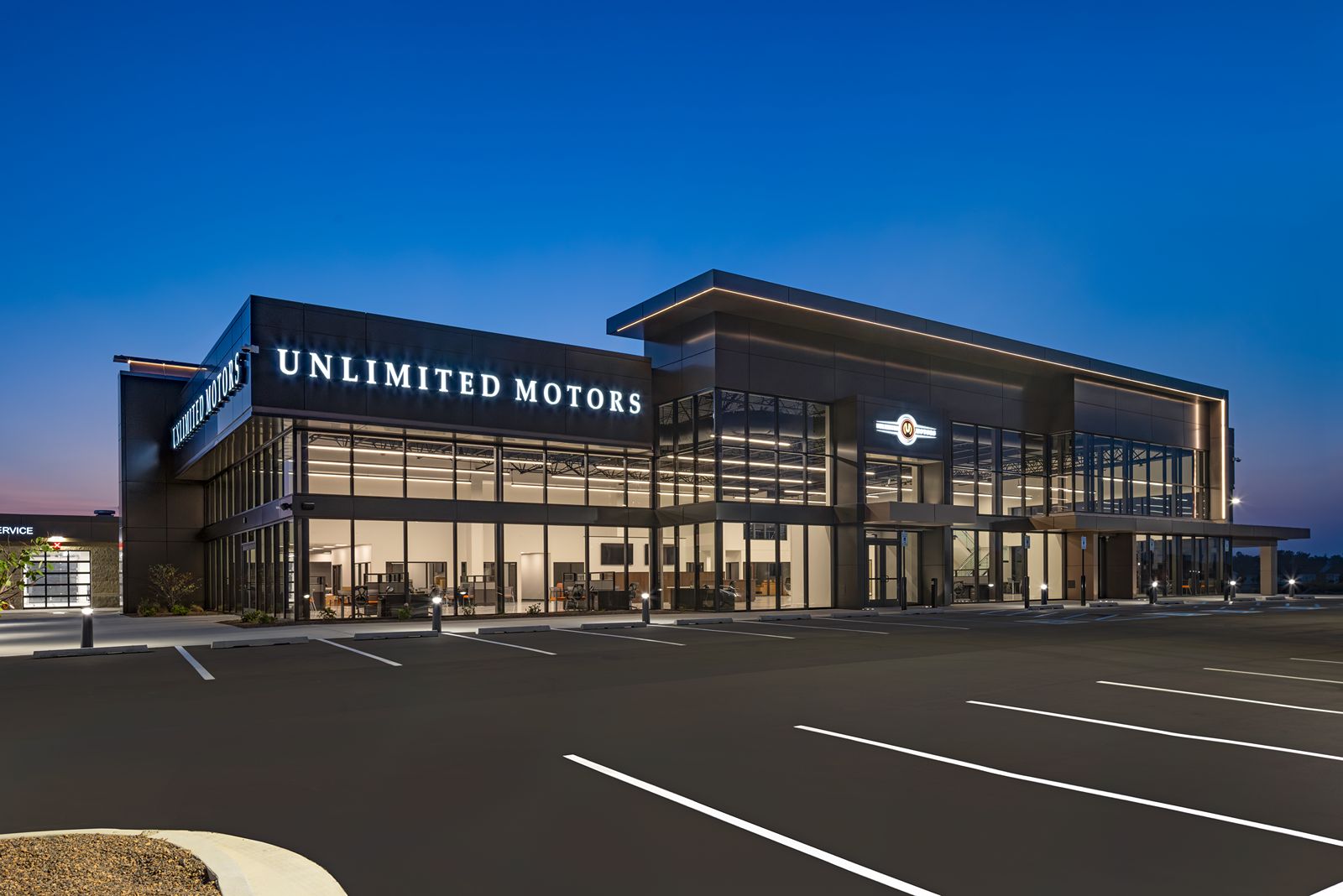
Flow Automotive operates several Virginia dealerships, and Richmond's Regency Automotive on Midlothian Turnpike represents the kind of full-service dealership campus, showroom, service bays, and pre-owned lot offices, whose diverse roof systems demand a contractor who understands both the architectural requirements of modern automotive retail and the mid-Atlantic climate that shapes every roofing decision in central Virginia. Commercial roofing for auto dealerships in Richmond must navigate humid summers, moderate freeze-thaw cycling, tropical storm exposure as weakening Atlantic hurricanes track inland, and the specific operational demands of facilities that remain open to customers six days a week with service departments that cannot shut down for construction without significant financial impact.
Showroom roofing at Richmond dealerships typically combines standing-seam metal panels on the most architecturally visible elements with low-slope TPO or modified bitumen systems on service department buildings and secondary structures. The interface between these two system types, at counterflashings, reglet details, and step flashings where the metal panel system meets the flat-roof sections, requires the most careful design and installation attention. Richmond's precipitation pattern, with rain distributed throughout all twelve months at over forty-three inches annually, means that these transition details face sustained moisture exposure with no extended dry season in which minor infiltration would dry out harmlessly.
Virginia's humidity creates specific roof assembly performance challenges for dealership buildings. Service departments are heated spaces with large overhead doors that create interior-exterior pressure and humidity differentials. Vapor management within the service building roof assembly must be designed for Virginia's mixed-humid climate zone to prevent condensation on the underside of the metal deck that occurs when warm, humid interior air meets the cold deck surface in winter. Incorrectly placed or omitted vapor retarders in service building roofs can cause deck corrosion within a few years of installation, leading to structural deck replacement that is far more costly than proper vapor management design.
Tropical weather exposure is a meaningful risk factor for Richmond auto dealerships. The James River corridor has historically channeled tropical systems inland, and Hurricane Isabel, Hurricane Floyd, and multiple subsequent tropical events have demonstrated that Richmond can receive substantial wind and rainfall from tropical systems long after they have weakened from their coastal peak. Edge metal and perimeter flashings on Richmond dealership roofs should be specified and installed to withstand Virginia's wind design category requirements, which are more demanding than purely inland markets because of the region's tropical system exposure.
Skylights in Richmond dealership showrooms require particular attention to thermal movement across the mid-Atlantic seasonal range. Summer temperatures above ninety degrees and winter temperatures that occasionally fall below zero Fahrenheit create a total annual temperature range across which skylight frames and their surrounding roof membrane must maintain a continuous seal. We use self-adhered secondary membranes at all skylight curbs and design flashing details with the movement tolerance required for Richmond's full seasonal range, providing long-term performance that simple silicone-sealant-only transitions cannot deliver.
Occupied facility operations are the dominant project management challenge for Richmond dealership re-roofing. Service appointments are booked weeks out, new vehicle deliveries arrive on unpredictable schedules, and the showroom floor must present a professional environment at all times. Our project execution approach for Richmond dealerships begins with a facility walk-through with dealership management to map customer and vehicle circulation, identify sensitive areas requiring protective coverage, and establish noise and schedule restrictions that protect the customer experience throughout the project duration.
Long-term asset management for Richmond dealership owners benefits from documented maintenance programs that keep manufacturer warranties current and provide capital planning data that supports facility reinvestment decisions. Richmond's dealership market has seen significant consolidation over the past decade, and facilities that enter the transaction process with current roof warranties, inspection records, and documented capital expenditure timelines command more confidence from buyers and lenders than those with unverified roof conditions.
Energy performance in Richmond's climate rewards both cooling-season reflectivity from light-colored membranes and heating-season insulation performance. The Virginia Department of Energy's commercial energy programs and Dominion Energy's commercial efficiency rebates provide financial incentives for qualifying roofing improvements, and we assess eligibility for these programs during the design phase of every Richmond dealership project.
From the Midlothian corridor's competitive auto row to dealerships in the West End and the growing suburban markets of Short Pump and Glen Allen, our Richmond commercial roofing team delivers the brand compliance, climate expertise, and operational sensitivity that Virginia automotive retailers expect from a professional roofing partner. Contact us today for a free assessment of your dealership campus's roofing systems and a capital planning proposal for the years ahead.
- What causes the most roofing failures at Richmond auto dealerships?
- Flashing failures at the transition between metal roof panels and low-slope sections are the most common failure mode, followed by skylight curb leaks. Richmond's year-round precipitation means these transition points face sustained moisture exposure with no dry-season relief. Self-adhered secondary membranes and properly engineered counterflashing details address both failure modes.
- How does Virginia humidity affect my Richmond service department roof?
- Service bays are heated spaces that generate warm, humid air. Without a correctly placed vapor retarder in the roof assembly, this moisture migrates toward the cold deck and condenses in winter, causing corrosion. Virginia's mixed-humid climate zone requires vapor management design that accounts for both heating and cooling season moisture dynamics.
- Do tropical storms affect Richmond dealership roofs significantly?
- Yes. Virginia has historical exposure to tropical systems tracking inland through the Carolinas. Edge metal and perimeter flashings specified for Virginia's wind design category provide meaningful protection. Tropical event post-inspections are also valuable, as wind-driven rain can expose minor vulnerabilities that wouldn't be apparent under normal rainfall conditions.
- How do you protect the showroom floor and vehicle inventory during re-roofing?
- Protective deck coverings over the showroom floor, temporary waterproofing covers over any open roof sections, and scheduling of tear-off phases for closed-hours windows all protect vehicle inventory and the showroom environment. We confirm all protective measures with dealership management before work begins.
- What documentation should I have for my Richmond dealership roof?
- Manufacturer system warranty, contractor workmanship warranty, as-built drawings, pre-construction moisture scan, and documented maintenance history are all valuable for operations, financing, and eventual sale of the facility. We provide complete closeout documentation packages as standard practice on every Richmond project.
Talk to a Richmond commercial roofer
Tell us about the building and the issue. We will set up a roof walk and get you a clear, documented scope.