Commercial Roof Insurance Claim Assistance in Richmond, VA
Roof-level documentation, adjuster walk-throughs, and complete-scope damage records for Richmond commercial buildings filing a roof insurance claim.
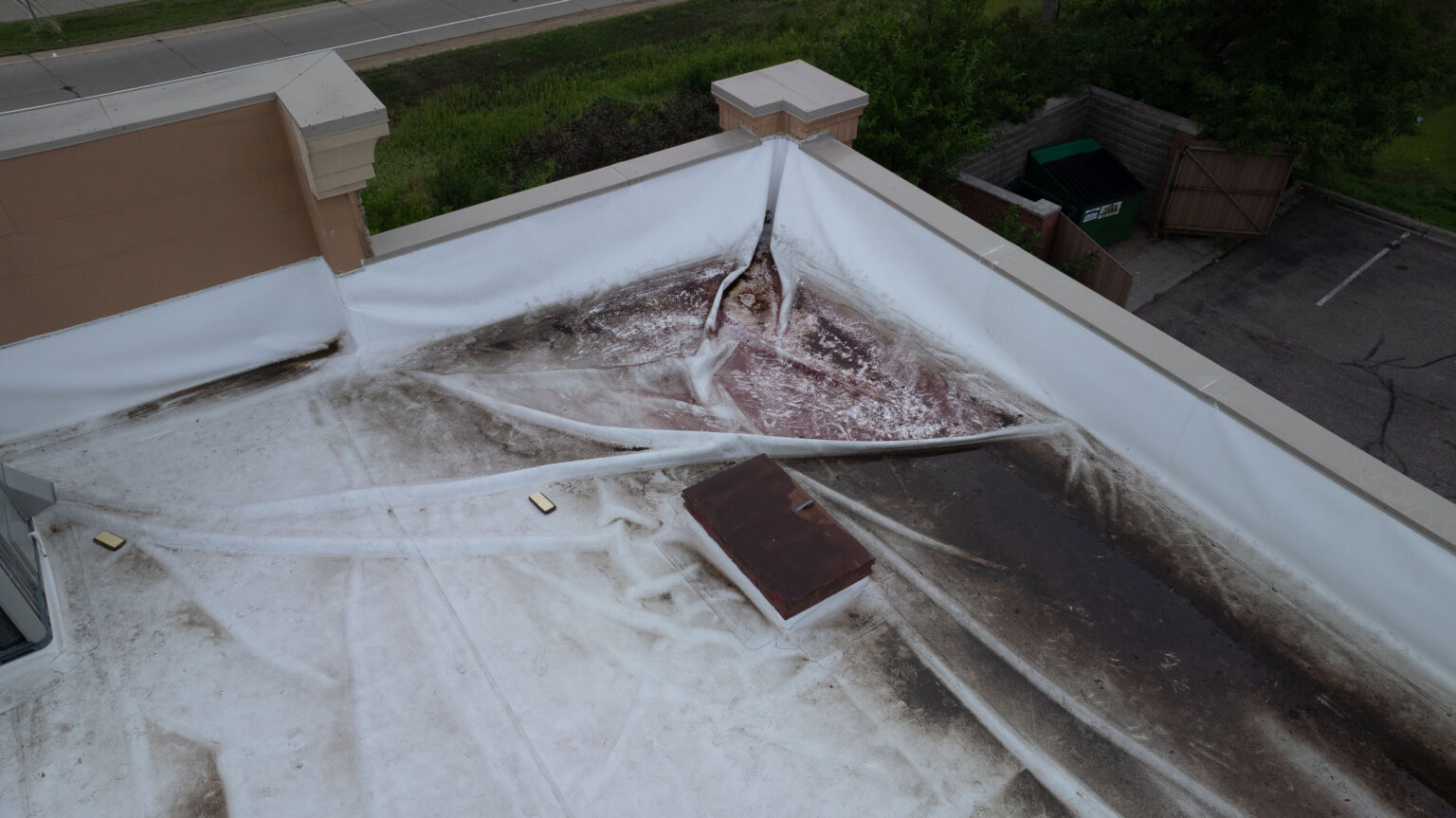
Most Richmond property managers do not think about their roof's insurance file until a storm tears a section of coping loose or a limb punches through an aging EPDM field. By then the roof has usually been walked once by someone from the insurance side and the building owner is left guessing whether the estimate that comes back actually covers what is wrong up there. A commercial roof insurance claim holds up when the roof gets documented before that conversation starts, by someone who spends their working hours on roofs rather than behind a desk.
Our role in a Richmond commercial roof insurance claim is straightforward: we inspect the roof, document what we find, and produce a scope that reflects the true extent of the damage. We are a roofing contractor, not a public adjuster. We do not file the claim, negotiate the payout, or represent the owner against the carrier. What we do is put a set of facts in front of the adjuster and the building owner that neither side has to take on faith.
What a Documented Roof Claim Actually Requires
A usable roof insurance claim file has more in it than a handful of phone photos. We walk the entire roof field rather than the one area where the damage was reported, because a single storm event rarely stays confined to one spot. That walk produces dated photos tied to specific roof zones, moisture readings where wet insulation is suspected, measurements of affected membrane and flashing runs, and notes on any pre-existing conditions we can identify so they are not mistaken for storm damage. On a building near Scott's Addition or the industrial edges of Manchester, that pre-existing distinction matters more than most owners expect, since a lot of the roof stock there sits on older tobacco-warehouse and light-industrial buildings that have been recovered or patched more than once before the current tenant improvement.
Meeting the Adjuster on the Roof
We schedule our own roof walk to happen alongside the adjuster's whenever the timeline allows it. Standing on the roof together lets us point directly at things that are easy to miss from the ground, from a drone pass, or from a report written after a five-minute look: lifted perimeter metal that has started to separate at the fasteners, membrane punctures hidden under loose ballast, or a scupper that has been quietly overflowing into the parapet cavity for longer than one storm. We are not there to argue a number. We are there to make sure the adjuster sees the same roof we saw.
Framing the Complete Scope
An insurance estimate that only covers a patch over the reported leak is common, and it is often wrong for the building. If the damaged section of membrane can no longer be matched because the manufacturer discontinued that product run, or if current code requires additional insulation or edge-securement work when a section of roof is opened up, that belongs in the scope. Virginia's 2021 Uniform Statewide Building Code took effect statewide in January 2024, and it shapes what a reroof or partial replacement has to include once a permit is pulled, particularly around insulation and existing-building assumptions. We itemize those requirements in the file so the claim reflects a repair that can actually be built to code instead of the cheapest square footage that technically stops the leak.
When a Claim Comes Back Denied or Underpaid
A denial or a low estimate is not always the end of the conversation. Often it means the carrier's inspector saw less roof than we did, or the stated reason for denial does not match what is actually on the deck. In those cases we go back up, add the photos, measurements, or moisture readings that speak directly to the carrier's stated objection, and hand the building owner a supplemental file they can bring back to their agent or adjuster. We are your roofing contractor, not a public adjuster — we document and substantiate the roof damage so you and your adjuster work from an accurate scope. We do not promise a different outcome, only a more complete record to work from.
Richmond Roof Stock and Claim Complexity
The building mix around Richmond adds its own wrinkles to a roof claim. Converted tobacco warehouses in Scott's Addition and Manchester often carry roof assemblies built in phases as the building changed use, which means a single storm event can expose damage on two or three different roof systems tied together at odd transitions. State office buildings near Capitol Square tend to require more procedural care around access and scheduling than a private commercial site. Distribution centers along the I-95 corridor carry enormous flat membrane fields where wind uplift and debris damage can spread across a wide area that a quick ground-level look will never catch. Each of those building types changes how the documentation needs to be organized, even when the underlying claim process is the same.
Frequently Asked Questions
Does insurance cover a full roof replacement or just a repair?
It depends on the damage. If the affected area is isolated and the roof is otherwise sound, most policies point toward a repair. If the damage is widespread, the membrane can no longer be matched, or code requires bringing the whole roof up to current standards once work starts, the file we build supports a replacement conversation with the carrier.
What does the claim process usually look like from the roof side?
We inspect and document first, then coordinate a joint roof walk with the adjuster where scheduling allows it, then deliver a written scope with photos and measurements the owner can hand to their agent.
What happens if our claim gets denied?
We review the stated reason for the denial against what we documented on the roof. If there is a gap, we go back up and add the specific evidence that addresses it, then hand the owner a supplemental file.
Who decides between repair and full replacement?
The carrier and the building owner make that call. Our job is to document the roof accurately enough that the decision is based on what is actually there, not on a guess made from the ground.
Do you file the claim or negotiate with the insurance company for us?
No. We are a roofing contractor, not a public adjuster. We inspect, document, and provide a written scope. The owner and their agent handle the claim itself.
Will someone from your crew be on the roof when the adjuster comes out?
Whenever the schedule allows, yes. Having someone who works on roofs standing next to the adjuster tends to produce a more accurate inspection than either side working alone.
Talk to a Richmond commercial roofer
Tell us about the building and the issue. We will set up a roof walk and get you a clear, documented scope.