
Retail Roofing in Richmond, VA
Commercial roofing for strip malls, shopping centers, anchor stores, and standalone retail buildings throughout Richmond, VA.
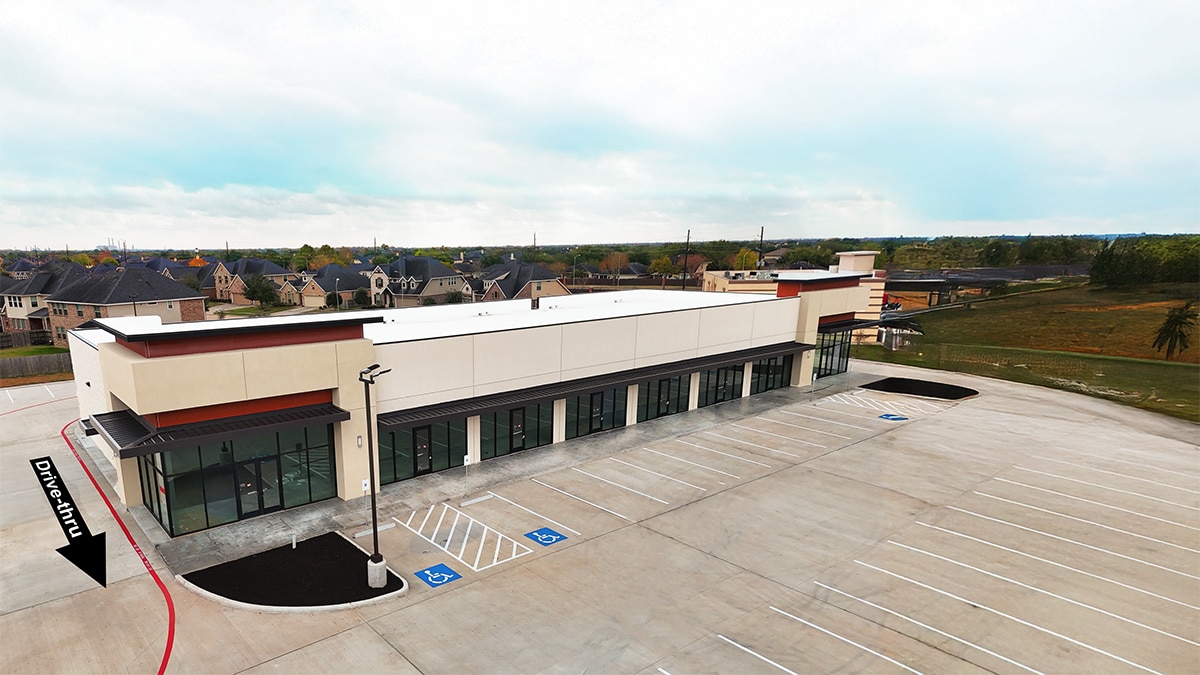
Richmond's retail landscape spans from the anchor-heavy centers along Midlothian Turnpike and the Route 1 corridor in Chesterfield County to the revitalized retail corridors in Scott's Addition, the Carytown strip, and the shopping centers centered on grocery stores throughout Henrico County. This market encompasses retail buildings from the 1950s through recent construction, representing an unusually wide range of roof system ages, conditions, and complexity levels. The James River city's four-season climate, hot and humid summers, cold winters with ice and snow, and transitional seasons that deliver intense thunderstorms, creates year-round weather stress on commercial roofing that demands systems engineered for the full Mid-Atlantic range.
TPO has become the dominant re-roofing specification for Richmond area retail properties, displacing the modified bitumen and BUR systems common on the metro's older commercial stock. The heat-welded seam advantage is particularly relevant in Richmond because of the market's thunderstorm exposure, the metro receives more than 40 thunderstorm days annually, with some storms delivering hail and high winds that test membrane seam integrity directly. The reflective surface also addresses Richmond's summer heat island effect, which pushes rooftop temperatures well above 150°F on flat retail surfaces during July and August, accelerating HVAC equipment wear and increasing cooling costs for tenants operating under gross leases.
HVAC penetration management on Richmond's older retail stock is a recurring challenge. Strip centers built in the 1970s and 1980s along Broad Street, Jeff Davis Highway, and through the Regency Square area were designed with a penetration density that made sense at the time but has often grown as tenants added equipment and the original roof system was patched around new penetrations rather than properly flashed. Any competent re-roofing assessment in the Richmond market should include a complete rooftop penetration audit, mapping every unit, evaluating every curb, and identifying penetrations that lack adequate flashing height above the current or proposed membrane level.
Richmond's retail tenant mix includes a significant concentration of locally owned and operated businesses alongside national chains. The Carytown corridor, Shockoe Bottom, and the emerging Scott's Addition retail district have retail operators who are deeply invested in their physical space and highly attentive to any disruption that affects customer access or interior conditions. Working alongside these tenants requires a contractor who values communication over convenience, providing genuine advance notice, honoring commitments about work hours and access impacts, and responding quickly to concerns rather than treating tenant communication as an obstacle to project progress.
Flat roof drainage on Richmond retail properties must handle both the summer thunderstorm intensity and the slower, sustained precipitation of winter and spring frontal systems. The metro's clay soil conditions mean that surface water management around buildings is already a concern, and flat roofs that discharge poorly, either through blocked internal drains or undersized scuppers, compound the moisture management challenges at grade level. Internal drain leader lines in older Richmond retail buildings frequently have cast iron runs that have partially corroded or that have been affected by building settling over the decades, reducing effective flow capacity below what the drain bowl capacity implies.
Richmond's retail market has seen significant investment activity in recent years, with investors acquiring older strip centers along the Route 60 and Route 1 corridors for renovation and repositioning. For these value-add buyers, the roof is frequently the largest immediate capital obligation, a building acquired with a 15-year-old membrane that is five years from end of life has a known capital event coming, and pricing that event correctly at acquisition requires a professional condition assessment, not a drive-by evaluation. The difference between a 5-year and a 3-year remaining service life estimate is potentially hundreds of thousands of dollars in purchase price and reserve calculation for a 50,000-square-foot strip center.
CAM budget management for Richmond retail properties follows Virginia's established commercial real estate norms. Most retail leases in the market are NNN with landlord-controlled CAM, which means roof maintenance and replacement costs are typically recoverable from tenants, subject to lease caps and exclusions. Managing the CAM roofing line item effectively means maintaining detailed documentation of all maintenance activity, tracking costs per square foot against market benchmarks, and ensuring that capital replacement expenditures are appropriately distinguished from routine maintenance in the annual reconciliation. Richmond retail tenants are generally sophisticated about CAM and will audit unusual year-over-year swings in the roofing component.
Ice storms represent a specific winter roofing risk in Richmond that doesn't exist in most southern markets. The metro sits in a transition zone where winter precipitation frequently comes as freezing rain rather than snow, and the ice accumulation on flat retail roofs, particularly on north-facing sections that don't get direct sun, can be substantial. The weight of ice accumulation combined with subsequent rain on top of the ice layer creates a loading scenario that older retail buildings were not necessarily designed for. Overflow scupper openings that are frozen over during an ice event are non-functional, and that dynamic needs to be addressed in the drainage design for Richmond retail roofs with parapet walls.
Selecting a commercial roofing contractor for Richmond retail properties means looking for firms with demonstrated experience on the specific project type, occupied multi-tenant retail buildings, in the Central Virginia market. The Richmond area has competent roofing contractors who specialize in residential, industrial, and institutional work, but retail roofing requires the coordination skills to manage tenant relations, the scheduling discipline to phase work around commercial operations, and the technical knowledge to navigate the specific challenges of older commercial building stock in this market. Verifiable references from comparable retail projects completed in Henrico, Chesterfield, and Richmond City within the past five years are the most reliable basis for contractor selection.
- What weather events pose the greatest risk to Richmond retail roofs?
- Thunderstorms with hail are the most common acute risk, capable of puncturing or bruising single-ply membranes in ways that create leaks within one to two years. Winter ice storms present a secondary structural risk through ice accumulation weight and frozen drainage, and hurricane remnants that track inland through Virginia can deliver extended heavy rainfall that overwhelms drainage on poorly maintained roofs. A comprehensive annual inspection program addresses the aftermath of all three event types.
- How should Richmond retail investors account for roof condition in acquisition underwriting?
- A professional roof condition assessment prior to closing provides a documented remaining service life estimate and identifies any deferred maintenance items that affect the timeline for replacement. The assessment report should include a per-square-foot replacement cost estimate in the current Richmond market, allowing the buyer to calculate the capital reserve obligation accurately. Acquiring a property with an undisclosed roof problem is one of the most common value-erosion scenarios in retail real estate investment.
- What makes Richmond's ice storm events a roofing concern?
- Freezing rain accumulates as a solid ice layer rather than loose snow, adding structural load that can't be removed easily and that seals overflow scuppers, blocking emergency drainage during subsequent rain events. Flat retail roofs with parapets are particularly vulnerable because ice accumulates in the field without any natural drainage path until it melts. Design details that keep overflow scupper openings protected from ice sealing, or that provide heat trace at critical drainage points, are the standard response to this risk.
- How do Richmond's NNN leases affect roofing cost recovery?
- Most Richmond retail NNN leases allow the landlord to recover roof maintenance costs through annual CAM charges, but capital replacement expenditures are often subject to amortization provisions that limit single-year recovery. Review the specific lease language governing roof replacement, some leases require tenant consent for projects above a certain cost threshold, and some national tenants have negotiated exclusions for capital items they classify as ownership obligations. Understanding the recovery framework before finalizing a roofing project budget is essential for accurate return-on-investment analysis.
- What maintenance activities extend the life of a Richmond retail roof?
- Annual inspections with documented written reports, semi-annual drain cleaning, prompt repair of any identified seam or flashing deficiencies, and post-storm inspections after significant hail or wind events are the core maintenance activities that sustain full membrane service life. Biennial inspections of all HVAC curb flashings and penetration sealants address the most common entry points for moisture infiltration before they develop into active leaks. A documented maintenance record also supports warranty claims during the coverage period.
Talk to a Richmond commercial roofer
Tell us about the building and the issue. We will set up a roof walk and get you a clear, documented scope.