
Warehouse Roofing in Richmond, VA
Commercial roofing for warehouses, distribution centers, and industrial facilities throughout Richmond, VA. TPO, EPDM, and metal roof systems.
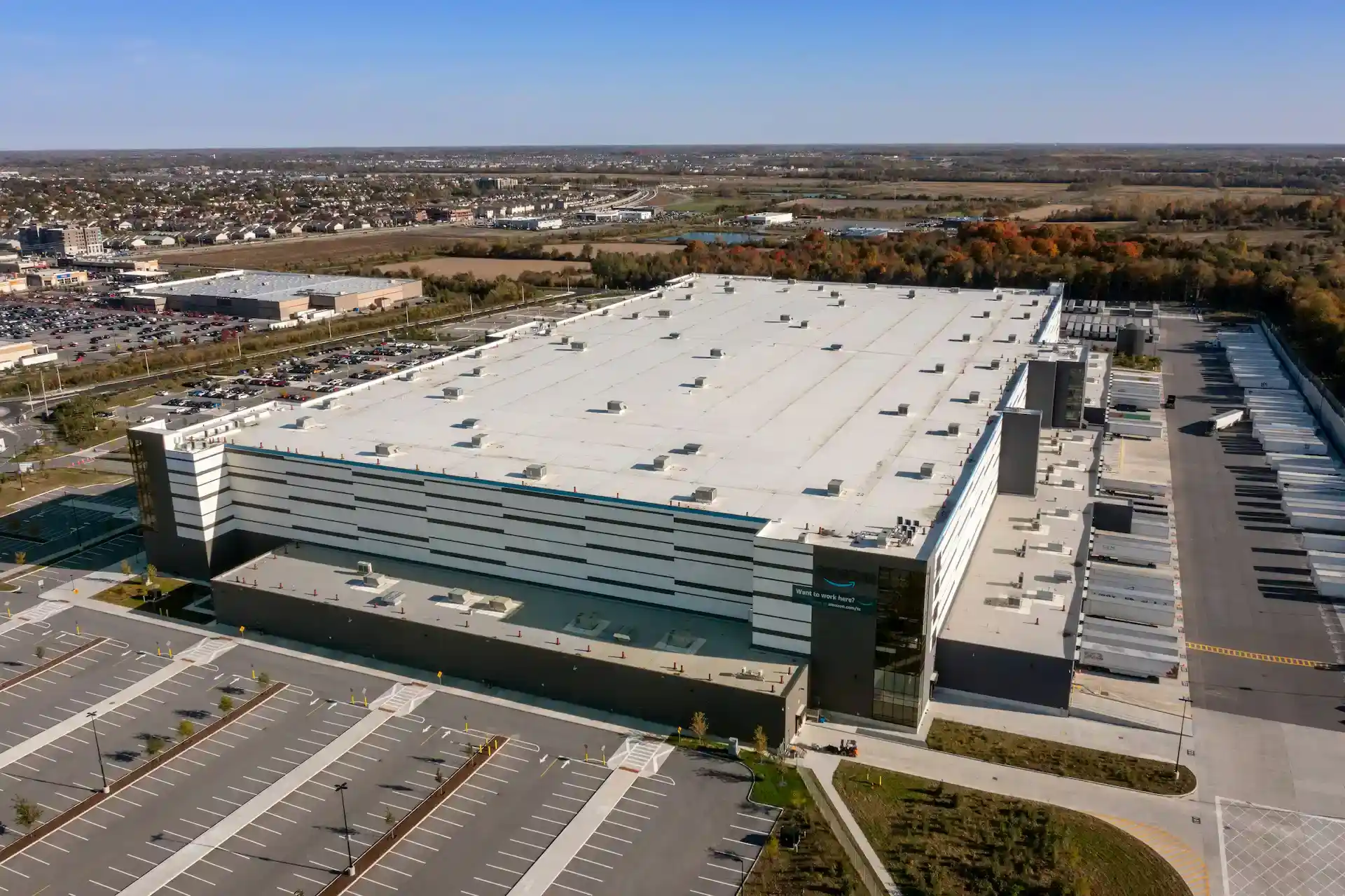
Amazon's enormous fulfillment center on Meadowville Technology Parkway in Chester, just south of Richmond, Virginia, is the hub of the fast-growing logistics corridor along the I-95 corridor in Chesterfield County. Warehouse and distribution facility owners throughout the Greater Richmond area, from the Henrico industrial parks near I-64 to the expanding Northgate Commerce Center, operate in a climate that combines Mid-Atlantic humidity with a meaningful winter freeze-thaw cycle, creating roofing requirements that differ from both the Deep South and the Northeast while sharing characteristics of both.
TPO has displaced EPDM as the market-dominant membrane for new Richmond warehouse construction over the past ten years, driven by Virginia's energy code and the competitive pricing of white TPO in a market with strong regional distribution from Southeast roofing supply houses. The Virginia Uniform Statewide Building Code (VUSBC) adopts ASHRAE 90.1 with Virginia amendments; Richmond's climate zone 4A designation requires minimum R-30 continuous insulation and cool-roof compliance on large commercial buildings. A 60-mil mechanically attached white TPO system on two layers of polyiso board totaling R-30 or better is the standard specification for new logistics buildings in the Richmond market.
Drainage on a Richmond warehouse must handle both the region's summer thunderstorm events, which regularly deliver two to three inches per hour during July and August, and the late-summer tropical remnants that track through Virginia after weakening offshore. Hurricane Ida's remnants in 2021 delivered five to eight inches of rain to the Richmond metro in 24 hours, causing widespread roof ponding and failure at facilities with undersized drainage. Size primary drains using the Virginia Plumbing Code's intensity tables for the Richmond area (approximately 5.3 inches per hour for a 100-year, 1-hour event) and install overflow scuppers through the parapet as a mandatory secondary system on every large warehouse roof.
Dock penetration flashing in Richmond must handle a climate where the temperature can range from 15 degrees in January to 100 degrees in July, creating an 85-degree differential that drives thermal movement in metal counterflashings. Two-piece reglet flashings with expansion joints at 20-foot intervals, combined with TPO or EPDM membrane flashing lapped a minimum of 8 inches up the dock wall, are the standard detail. Galvanized steel counterflashing is acceptable in Richmond's climate (unlike the more corrosive environments of the Gulf Coast), but prefinished Galvalume provides better long-term performance and is worth the modest premium on a 20-year roof system.
Forklift exhaust ventilation, battery charging fume extraction, and refrigeration equipment condensers create a dense penetration field on Richmond distribution center roofs. The humidity of Virginia summers, combined with temperature differentials between interior conditioned spaces and hot summer exteriors, creates significant condensation risk on un-insulated penetration curbs. Require insulated curb construction on all mechanical equipment bases, not just climate control units, but every elevated curb penetration, and verify that curb insulation is continuous from the deck surface to the top of the curb wall before membrane flashing begins.
Virginia's energy code compliance for large warehouse roofs is enforced by local building departments, with Richmond and Chesterfield County each maintaining their own inspection programs. VUSBC amendments to ASHRAE 90.1 as adopted for climate zone 4A require R-30 continuous insulation for re-roofing projects when more than 50 percent of the existing insulation is removed. Some older Richmond warehouses originally built with low insulation values trigger a full insulation replacement on any substantial reroof, which significantly affects project scope and budget. Always engage a building envelope engineer to assess code compliance requirements before finalizing a reroof scope on a pre-2010 Richmond industrial building.
Richmond's commercial roofing permit process runs through the City of Richmond Department of Planning and Development Review or, for county buildings, through Chesterfield County's Building Inspection division. Virginia does not have a state roofing contractor license, but the Virginia Department of Professional and Occupational Regulation (DPOR) requires a contractor license for construction projects above $1,000. For commercial roofing contracts, verify that the contractor holds a current Class A or Class B contractor license from DPOR and carries minimum $1 million in general liability insurance. Large public or university projects in the Richmond area may require prevailing wage compliance under Virginia's recent prevailing wage statute.
Preventive maintenance on a Richmond warehouse roof should be scheduled in April (before hurricane season) and in November (before freeze season). Each inspection should document drain condition and flow rate, membrane seam integrity, and flashing condition at all penetrations. Post-tropical-event inspections after systems that track through Virginia, which have historically caused significant warehouse roof damage in the Richmond area, should be standard practice for any building with a large flat roof area. Budget $0.10 to $0.14 per square foot annually for maintenance on a Richmond warehouse, reflecting the combined challenge of a humid summer climate and a meaningful winter freeze-thaw cycle.
When evaluating contractors for a Richmond warehouse roofing project, look for demonstrated experience in Virginia's regulatory environment, familiarity with VUSBC energy code compliance for large industrial buildings, and references from other logistics facility owners in the Chesterfield-Henrico corridor. A contractor who primarily does residential or small commercial work in the Richmond market will lack the project management systems required to safely and efficiently execute a 200,000-plus square foot warehouse roofing project while maintaining operations in the facility below.
- What roofing system is most common for Richmond warehouse buildings?
- White 60-mil TPO on mechanically attached polyiso insulation achieving R-30 or better is the current market standard for new Richmond warehouse construction. The system meets Virginia's energy code requirements, satisfies cool-roof reflectance thresholds, and provides competitive lifecycle costs in the Mid-Atlantic climate.
- How should Richmond warehouse roof drains be sized for tropical storm events?
- Use the Virginia Plumbing Code's rainfall intensity tables for the Richmond area, not national default values. Size primary drains for the 10-year storm and install overflow scuppers through the parapet for the 100-year event. Tropical remnants can deliver multi-inch rainfall totals in short windows that overwhelm drainage systems designed only for routine thunderstorm events.
- Does Virginia have a specific roofing contractor license?
- Virginia does not have a separate roofing specialty license, but the Virginia DPOR requires a Class A or Class B contractor license for commercial work above the relevant threshold. Verify license status at dpor.virginia.gov before contract execution, and confirm that the license class covers the contract value of your project.
- What is the energy code insulation requirement for Richmond warehouse roofs?
- Virginia's VUSBC adopts ASHRAE 90.1 climate zone 4A, which requires R-30 continuous insulation for low-slope commercial roofs. This requirement applies to re-roofing projects when more than 50 percent of the existing insulation is removed, which is common when the underlying insulation is saturated or has compressed over time.
- How does Richmond's humidity affect TPO membrane performance?
- High humidity during summer installation can slow the cure of lap adhesives and create condensation on cold surfaces during winter, leading to adhesive failure and membrane lap separation. Specify water-resistant lap adhesive formulations and require that laps be rolled and pressed within the adhesive manufacturer's open time window, which is shorter in Richmond's humid summer conditions than in drier climates.
Talk to a Richmond commercial roofer
Tell us about the building and the issue. We will set up a roof walk and get you a clear, documented scope.