
Movie Theater Roofing in Richmond, VA
Roofing for multiplex and independent cinemas in Richmond, VA. Long clear-span decks, dense rooftop HVAC, sound and insulation, and work sequenced around the screening schedule.
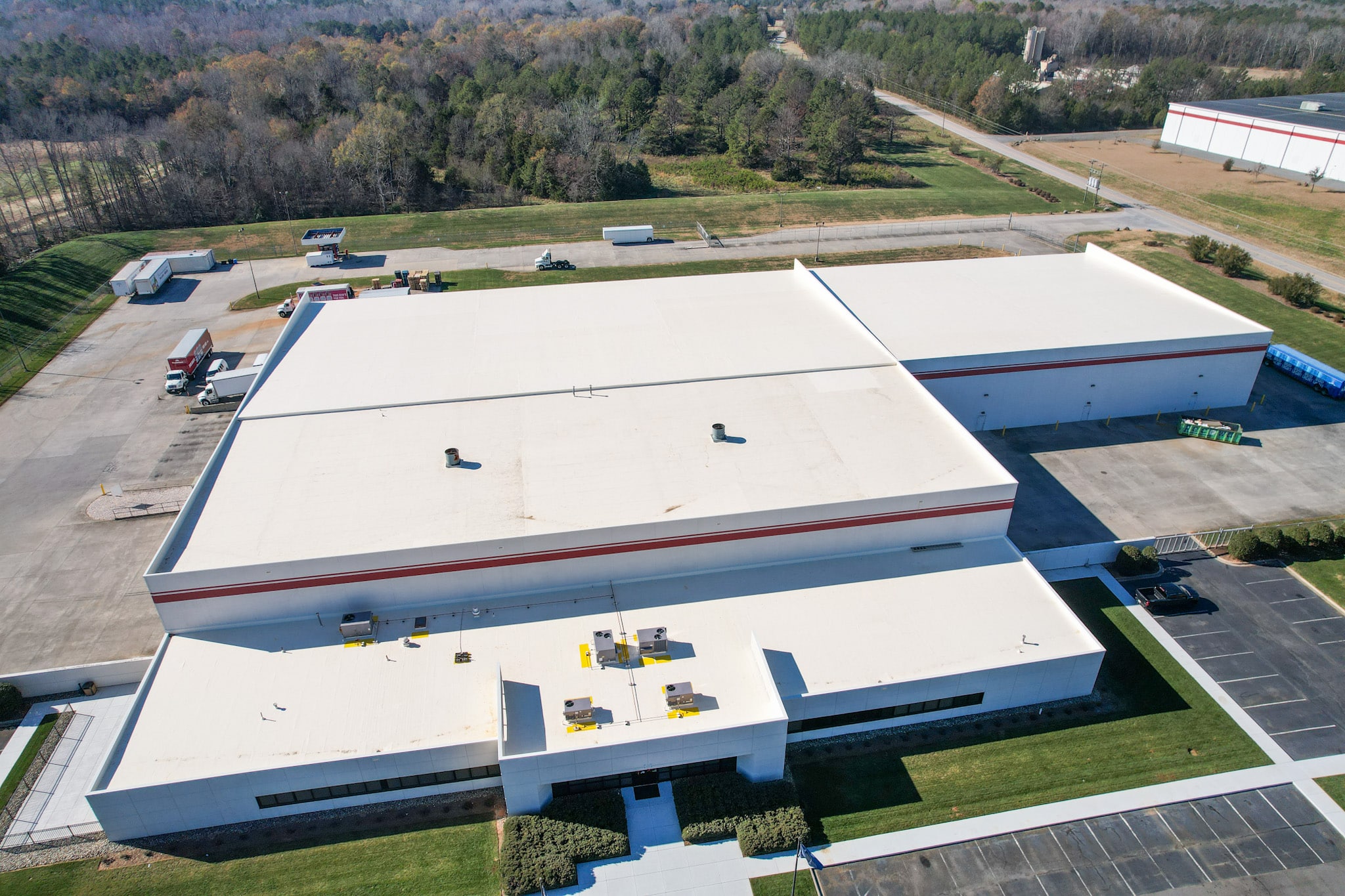
A Cinema Roof Is a Big Empty Span With a Lot Riding on It
Walk into a multiplex auditorium and look up: there are no columns. The roof above an eight- to twelve-screen house spans eighty to a hundred and fifty feet across each auditorium with nothing holding the middle. That clear span is what makes the room work and what makes the roof a specialized job. Long-span steel deck flexes under wind, snow, and thermal movement in ways a small retail roof never does, and a fastening pattern copied from a strip-center spec will fatigue at the seams over a span like that. We design cinema attachment and insulation to the actual deck and span in front of us, because the geometry here is genuinely different.
Richmond keeps its screens busy. The Short Pump and West Broad retail district carries the big suburban multiplexes, the Stony Point and Midlothian corridors south of the river add more, and the city has held onto historic and independent houses like the Byrd Theatre in Carytown alongside the dine-in and entertainment-anchored concepts going into mixed-use centers. Each of those buildings is a low-slope roof over a dark, occupied room where a leak lands on seats, screens, and projection gear.
Sound and Insulation Are Part of the Roof
A theater roof is not just keeping water out; it is keeping noise out and conditioned air in. Rain drumming on a thin assembly carries straight into a quiet auditorium, and the building's whole experience depends on it staying silent. The insulation package does double duty for acoustics and energy, and we keep that continuity intact through every detail rather than leaving thin spots and bridges at curbs and edges where sound and heat both leak. On a recover or replacement we look at the existing assembly's acoustic and thermal performance, not just whether it sheds water.
The Rooftop Mechanical Rivals a Hospital
Each auditorium needs its own conditioning, often a dedicated rooftop unit per screen, and that is before you add concession exhaust, lobby heating vents, and condensers for the walk-in coolers behind the food service. The penetration cluster on a typical Richmond multiplex is as dense as anything we flash. Every curb, duct, and conduit run is detailed and documented as its own item before new membrane goes over it, and we add reinforced walkway pads on the heavily traveled paths between units so service crews are not wearing through the membrane between visits.
Knowing the Deck Before We Spec It
Cinemas are usually steel deck or concrete deck over structural steel, and the substrate decides the attachment approach. Steel deck takes mechanical attachment, but older short-rib deck has lower pull-out values than modern three-inch rib, so we verify deck type and gauge and run pull tests rather than assuming. On spans where deflection is a concern, an adhered or hybrid system can be the better call to avoid concentrating point loads at seams. On any reroof we take a core sample first to confirm the existing insulation layers, moisture content, and total weight in place before deciding between a recover and a full replacement.
What we typically specify
The common Richmond cinema spec is 60-mil or 80-mil TPO mechanically attached over tapered polyiso. The tapered insulation corrects the drainage problems that build up over decades on a flat theater roof, and white TPO meets the cool-roof energy requirements most local jurisdictions now apply to commercial reroofing permits. Where chemistry or detailing favors it we will move to PVC, but the membrane choice always follows the deck and the conditions, not a default.
Drainage on a Span That Wants to Sag
A long clear-span deck does not stay perfectly flat. It deflects under load and over time, and the low point ends up near the middle of the auditorium where there is no easy place to put a drain. That is how theaters end up with ponding water sitting over the exact rooms you least want a leak in. We solve it with a tapered insulation design that builds positive slope toward drains and scuppers regardless of where the deck has settled, and we size the drainage for Richmond's heavy summer downpours rather than the bare code minimum. Internal drains over an occupied auditorium get particular attention, because a drain that backs up or a leader that leaks runs water straight down into the seats. We pressure-test and properly clamp every drain we touch.
Energy and the Dark Box Below
An auditorium is a sealed, dark, heavily conditioned room, and the roof is its largest exterior surface. White reflective TPO does real work here, holding rooftop temperatures down so the per-screen HVAC units are not fighting solar gain through the deck all afternoon, which is part of why the cool-roof requirement in local permitting actually helps a theater owner's operating cost. We keep the insulation thickness up to current energy code on a reroof rather than matching whatever thin assembly was there in the 1990s, and we close the thermal gaps at curbs and edges so the conditioned air the building pays for is not leaking out through the roof line. On a building that runs heavy cooling loads every evening, the roof's energy performance shows up on the bill.
Working Around the Show Schedule
Theaters run afternoon through late night, seven days a week, which makes them feel like a 24-hour building to a roofing crew. We sequence tear-off and dry-in so every section is watertight before the evening's screenings start, and we coordinate any HVAC shutdown needed for curb or penetration work around the showtimes and the facility's maintenance windows. Loading-dock access, marquee electrical, and evening foot traffic at the entrances all factor into the plan so the work stays clear of the doors when audiences arrive.
The marquee and entry canopies
Marquee supports and entry canopies penetrate or tie into the roof, and those connections are a classic source of chronic leaks on older theaters. We treat every marquee fastener and canopy-to-building transition as its own flashing item and re-detail them as part of the project rather than leaving the one spot most likely to leak.
What You Get From Us on a Cinema
- Attachment and insulation engineered for the real auditorium span and deck, verified with pull testing and a core sample.
- An assembly that holds its acoustic and thermal performance, not just its waterproofing.
- Individually flashed and documented penetrations with walkway protection on service routes.
- Tapered drainage that ends the ponding on long flat roofs.
- Sequencing tuned to showtimes, with each section dried in before the evening opens.
- Re-flashed marquee and canopy connections that stop the leaks at the entrance.
From a suburban multiplex in Short Pump to an independent house in the city, we roof Richmond cinemas for the span, the silence, and the schedule. Call us for a roof walk and a fixed-price proposal.
Talk to a Richmond commercial roofer
Tell us about the building and the issue. We will set up a roof walk and get you a clear, documented scope.