
Self Storage Roofing in Richmond, VA
Commercial roofing for self-storage facilities, mini-storage buildings, and climate-controlled storage properties throughout Richmond, VA.
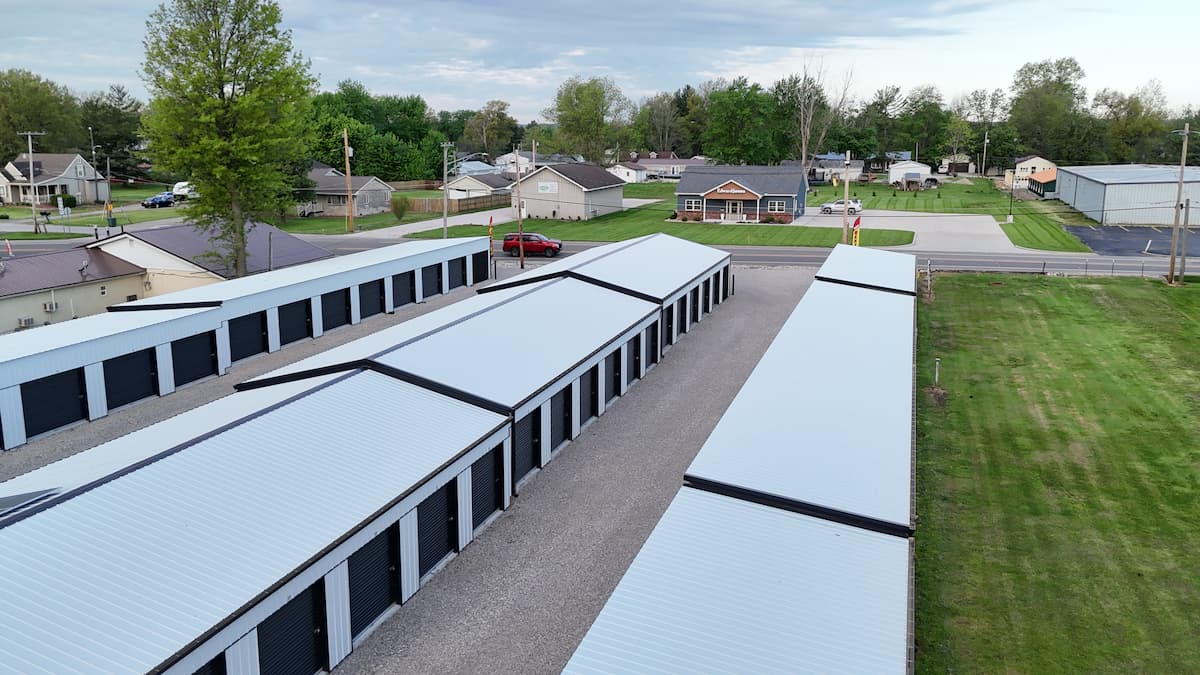
Storage USA, now part of Extra Space Storage, has operated in the Richmond market for decades, with multiple facilities across Henrico and Chesterfield counties serving a customer base that reflects the region's blend of military families, university students, and growing suburban households. Commercial roofing for self-storage in Richmond requires a contractor who understands Virginia's mid-Atlantic climate: hot, humid summers that stress membranes and promote biological growth, moderate winters with enough freeze-thaw cycles to attack poorly detailed flashings, and a tropical storm season that routinely delivers significant rain events to central Virginia as Atlantic hurricanes track inland through the Carolinas.
Self-storage facilities in the Richmond market have grown along the Route 1 and Midlothian Turnpike corridors, and many of these properties feature large single-story drive-up buildings with low-slope metal deck roofs that must perform through decades of Virginia weather. The most common failure mode we encounter in this market is compromised flashing at penetrations, HVAC curbs, plumbing vents, and electrical conduit exits, where original sealant has dried and cracked after years of thermal cycling. A systematic flashing inspection and renewal program prevents the vast majority of Richmond storage facility roof leaks at a fraction of the cost of reactive repair after water has reached insulation or the building interior.
Virginia's humidity creates specific biological growth concerns on storage roofs. North-facing membrane sections that do not receive direct sunlight to dry out between rain events can develop algae and moss growth within a few years of installation. Left unmanaged, algae streaking is a cosmetic issue; actual moss growth is a functional problem because moss roots penetrate membrane surfaces, accelerating UV degradation and creating pathways for moisture infiltration. We address this through biocide treatment at installation and regular cleaning visits as part of maintenance agreements for Richmond-area storage facilities.
Tenant protection in Richmond means protecting goods from both summer humidity infiltration and the occasional tropical event. Hurricane remnants and tropical storms regularly deposit significant rainfall on central Virginia, sometimes arriving with sustained winds that test perimeter flashings and edge metal. We specify Richmond storage roofs with perimeter securement details appropriate for Virginia's wind design categories and install overflow drainage systems sized for high-intensity rainfall rates that tropical systems can produce, even far from the coast.
Drainage engineering for Richmond storage roofs accounts for the James River watershed's drainage patterns and the area's mix of developed and undeveloped land. Many storage facilities in the Richmond suburbs were built before current stormwater management standards, and re-roofing projects present an opportunity to improve drainage performance. Tapered insulation systems that direct water to properly sized drains, combined with overflow scuppers set at the correct height, bring older facilities closer to current best practices and reduce the risk of structural overloading during heavy events.
Richmond's self-storage market includes a growing number of climate-controlled multi-story facilities, which introduce additional roofing complexity. Multi-story buildings have upper-floor roofs that serve as the weather barrier for all floors below, making their performance critical. We design roofing systems for multi-story Richmond facilities with enhanced insulation values, vapor retarder placements calibrated to Virginia's climate zone, and penetration details that account for the concentrated mechanical equipment often found on upper-floor rooftops of these buildings.
Re-roofing logistics in Richmond's suburban corridors generally offer more staging area than urban markets, but facilities along busy arterials like West Broad Street or Midlothian Turnpike require traffic control planning for material deliveries and debris disposal. Our project managers work with Henrico and Chesterfield county permit offices to secure right-of-way approvals when needed, and we coordinate material deliveries for early-morning windows to minimize impact on peak traffic periods.
Long-term documentation and warranty management are particularly valuable in the Richmond market, where self-storage properties frequently change hands as part of investor portfolio transactions. A roof with current manufacturer warranties, documented inspection history, and as-built drawings transfers to a new owner as a verified asset rather than an unknown liability. We provide comprehensive closeout documentation packages for every Richmond project that meet the standard required by commercial real estate lenders and due-diligence reviewers.
From facilities in the West End to properties in Mechanicsville and Colonial Heights, our Richmond commercial roofing team is equipped to assess, repair, and replace self-storage roofs throughout the greater Richmond region. We understand Virginia's climate, its building code requirements, and the specific demands of protecting tenant property through decades of mid-Atlantic weather. Call us today to schedule your free facility assessment.
- How often do Richmond self-storage roofs fail at flashings rather than field membrane?
- The majority of active leaks we investigate in the Richmond market originate at flashings, HVAC curbs, pipe penetrations, and termination bars, rather than in the open field membrane. These are the highest-stress points on any roof and deserve the most attention during both initial installation and ongoing maintenance inspections.
- Does Richmond's humidity cause roofing problems beyond just leaks?
- Yes. High ambient humidity promotes moss and algae growth on north-facing membrane surfaces, and it can contribute to interstitial condensation in poorly designed roofing assemblies. We address both through biocide treatment at installation and vapor retarder placement calibrated to Virginia's mixed-humid climate zone.
- How do I protect my Richmond storage roof from tropical storm damage?
- Perimeter edge metal and flashing details specified for Virginia's wind design category provide the primary defense. Overflow drainage sized for high-intensity tropical rainfall prevents ponding during extreme events. Annual pre-storm-season inspections verify that all terminations are tight and drains are clear before the season's biggest events arrive.
- Are Richmond self-storage roofs subject to any specific Virginia code requirements?
- Virginia has adopted the IBC and the Virginia Energy Code, which sets minimum insulation R-values for commercial roofs. Richmond also falls within a coastal-proximity wind design category that requires perimeter fastening details more robust than those used in less wind-exposed markets.
- What documentation should I expect at the completion of a Richmond re-roofing project?
- A complete closeout package should include the manufacturer's system warranty, the contractor's workmanship warranty, as-built drawings showing drain locations and membrane details, a pre-construction moisture scan report, and a recommended maintenance schedule. This documentation is standard practice for any reputable commercial roofing contractor.
Talk to a Richmond commercial roofer
Tell us about the building and the issue. We will set up a roof walk and get you a clear, documented scope.