
Humidity Damage Roof Repair in Richmond, VA
Repair for humidity-driven roof failures in Richmond, VA: blistering, ridging, saturated insulation, and failed vapor barriers diagnosed with infrared scanning before we open a single seam.
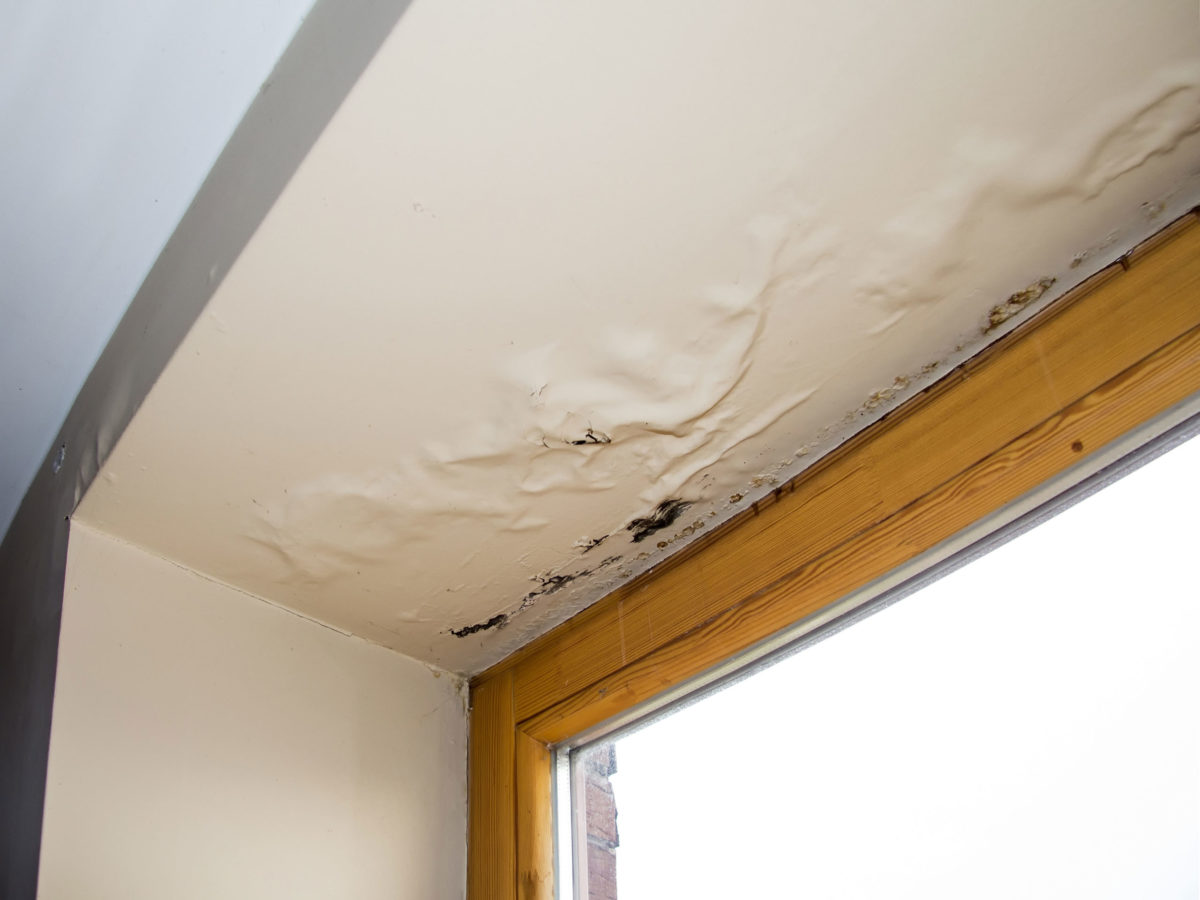
Some of the wettest roof assemblies we open up across Richmond have never let a drop of rain past the membrane. The water came from inside the building, pushed up through the deck as vapor, and condensed in the insulation where nobody could see it gathering. That is humidity damage, and it behaves nothing like storm damage or ordinary wear. Treating it like a leak, by climbing up to hunt for a hole in the surface, burns money and never touches the actual cause. The membrane is doing its job. The failure is happening underneath it.
Why this failure mode loves our climate and our buildings
Richmond runs hot and humid through the summer, and a lot of the commercial space here manufactures its own interior moisture on top of that outdoor load. The food and beverage operations along the Route 1 and Jefferson Davis industrial spine, the commercial kitchens and laundries inside hospitality buildings, the natatoriums and locker rooms on institutional and university campuses, and the cold-storage and distribution buildings near the Richmond Marine Terminal all push warm, moisture-laden air up against the underside of the roof deck. When that vapor reaches a cooler surface inside the assembly, it condenses, the same way a cold glass sweats on a humid afternoon. Across a season the insulation goes from damp to saturated, and the roof quietly fails from the inside out while the top still looks intact.
The layer that is supposed to stop this is the vapor barrier, the membrane that keeps interior moisture from migrating up into the insulation. In our climate the dominant vapor drive runs upward off the conditioned interior, which means the vapor retarder belongs low in the assembly, beneath the insulation. When it was installed in the wrong position, perforated by later rooftop work, or simply omitted to save a line item, the assembly turns into a moisture trap that fights building physics rather than working with it. Recovering a roof like that without correcting the vapor layer guarantees the new roof inherits the exact same problem, which is how owners end up paying twice for one failure.
What you can see, and the damage you cannot
Humidity damage announces itself in a few recognizable ways once you know the signs. Blistering is the classic one: vapor pressure builds under the membrane and lifts it off its substrate in raised pockets that grow over time. Ridging shows up as long raised lines tracking the insulation joints or the membrane seams, where moisture has worked along the path of least resistance. Underfoot the roof feels soft and spongy wherever the insulation has soaked up water, compressed, and lost both its R-value and the slope it was cut to hold. Along the perimeter, edge metal and coping begin to lift as moisture corrodes the fasteners pinning the fascia down.
The damage that does the real harm sits below all of that. Saturated insulation has effectively no thermal value, so the building bleeds conditioned air straight through the roof and the HVAC works harder and costs more every month the assembly stays wet. Worse, sustained moisture against a steel deck corrodes it, and a deck that has lived under wet insulation through a couple of roof cycles can be perforated and structurally compromised long before anyone topside suspects it. That is the dividing line between a roof you can repair and a roof you have to replace, and from the surface it is completely invisible.
We scan before we cut
Because the worst of this damage hides, we diagnose with infrared moisture scanning before committing to any scope. We scan after sunset, when the wet insulation holds the day's heat and reads warmer than the dry material around it, and we confirm every flagged zone with a core cut that lets us see the real condition of the insulation, the vapor retarder, and the deck. That survey is what separates a plan from a guess. Wet insulation caught early, while it is still confined to a few zones, is a repair. Wet insulation found after it has spread across the field and started corroding the deck is a replacement, and the only thing that reliably tells you which one you are facing is the data underfoot.
If the saturation is localized, we cut out the wet insulation down to a sound deck, replace it with dry material cut to restore slope-to-drain, tie the membrane back in over the repair, and re-secure any edge metal and flashings disturbed in that zone. If the scan shows wet insulation across more than roughly a quarter to a third of the roof, or if we find deck corrosion undermining the structure, a targeted patch is a temporary stay at best and we will tell you so plainly. Either way, when we re-roof we correct the vapor management that caused the failure, so the rebuilt assembly is not engineered to repeat it.
- Infrared moisture survey flown or walked after sunset, with every thermal flag confirmed by a core cut.
- Cut-and-replace of saturated insulation down to a sound deck, with new board cut to restore slope-to-drain.
- Vapor barrier correction so the rebuilt assembly works with the upward vapor drive instead of trapping it.
- A clear repair-versus-replace recommendation backed by the survey, not by a hunch.
Left alone, this only gets worse, and it gets worse faster than owners expect, because wet insulation feeds deck corrosion that feeds still more saturation. A roof reading fifteen percent wet coverage today can read forty or fifty percent two seasons from now, and the repair you could have afforded becomes a replacement you never budgeted. If your roof is blistering, ridging, or soft underfoot, call 804-689-3469 or email [email protected] and we will scan it before it spreads.
Common Questions
How do you find moisture you cannot see from the surface?
Infrared scanning after sunset, when saturated insulation holds the day's heat and reads warmer than the dry roof around it. We confirm each thermal flag with a core cut, so we can see the real condition of the insulation, vapor barrier, and deck before committing to a scope.
What causes moisture to get trapped if there is no leak?
Warm, humid interior air drives vapor upward through the deck. When it reaches a cooler surface inside the assembly it condenses into the insulation, just like sweat on a cold glass. A vapor barrier installed in the wrong position, perforated, or missing lets that happen and turns the roof into a moisture trap.
Can humidity damage be repaired, or do I have to replace the roof?
If the wet insulation is confined to a few zones with dry roof around them, we cut it out, replace it, and patch the membrane. Replacement is warranted when the saturation covers roughly a quarter to a third of the field or when the deck has corroded. The infrared survey is what tells us which case you actually have.
Why does the vapor barrier matter so much?
In our climate the moisture drive runs upward from inside, so the vapor retarder belongs beneath the insulation. If it is in the wrong place or absent, fixing the surface alone just recreates the failure in the new roof. We correct the vapor management when we rebuild so the assembly stops trapping moisture for good.
Talk to a Richmond commercial roofer
Tell us about the building and the issue. We will set up a roof walk and get you a clear, documented scope.